soumya.digitialmarketer@gmail.com

Google Ads vs Instagram Ads: What Actually Works for Businesses in Abu Dhabi?

Google Ads vs Instagram Ads: What Actually Works for Businesses in Abu Dhabi?
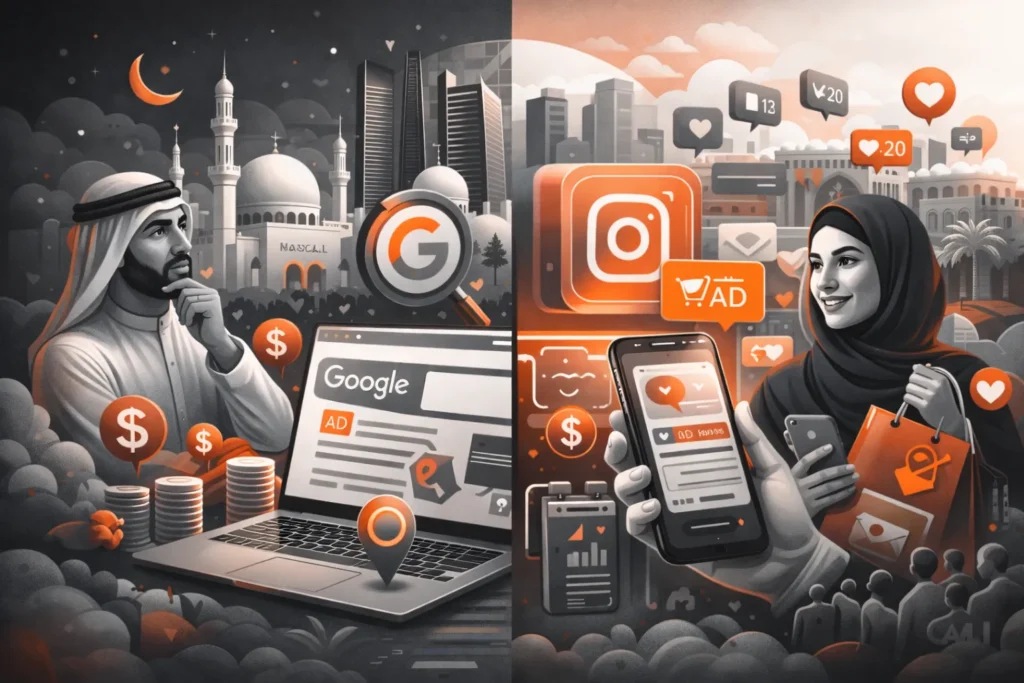
Freelance digital marketing Strategist in Abu Dhabi Image for Google Ads vs Instagram Ads: What Actually Works for Businesses in Abu Dhabi?

Businesses across Abu Dhabi are investing heavily in online advertising, yet many owners feel confused after spending money without clear results. One question comes up repeatedly during strategy discussions: Google Ads vs Instagram Ads, which platform actually delivers results for businesses in Abu Dhabi?

The truth is simple. Both platforms work, but they work for very different reasons. The mistake many businesses make is choosing a platform without understanding how people in Abu Dhabi search, scroll, and make decisions.

This blog gives you the full context, explains the real differences, and helps you choose the right platform based on your business goals, not trends.

How people in Abu Dhabi behave online

Abu Dhabi has a diverse population that includes locals, expats, and international professionals. Most people are mobile first users. They spend time on social platforms daily, but when they need something specific, they turn to Google.

For example, someone may scroll Instagram casually in the evening. But if they need a service urgently, they will search phrases like

Best clinic in Abu Dhabi

Home cleaning services Abu Dhabi

Freelance digital marketing Strategist in Abu Dhabi

This difference between browsing and searching is the foundation of the Google Ads vs Instagram Ads decision.

Google Ads for businesses in Abu Dhabi

Google Ads is built around search intent. It shows your ads to people who are actively looking for a solution.

Why Google Ads works in Abu Dhabi

People in Abu Dhabi often research before spending money, especially for services and high value purchases. When someone types a search query, it means they already have a need.

Common examples include

Freelance digital marketing strategist in Abu Dhabi

villa cleaning service Abu Dhabi

dentist near me Abu Dhabi

These searches signal readiness to act.

Benefits of Google Ads for Abu Dhabi businesses

  • Targets users with clear intent
  • Ideal for service based businesses in Abu Dhabi
  • Generates faster leads and enquiries
  • Works well for location specific searches

Industries such as healthcare, real estate, education, consulting, and professional services often see strong returns from Google Ads in Abu Dhabi.

Limitations of Google Ads

  • Cost per click can be higher
  • Poor landing pages reduce performance
  • Needs proper keyword and location targeting

When managed without strategy, Google Ads can drain budgets. When managed correctly, it becomes one of the strongest lead sources for local businesses.

Instagram Ads for businesses in Abu Dhabi

Instagram works on discovery, not intent. Users are scrolling, not searching.

Why Instagram Ads attract attention

Instagram is a visual platform. People use it to explore brands, lifestyles, and experiences. In Abu Dhabi, Instagram plays a big role in influencing buying decisions, especially for lifestyle related businesses.

Benefits of Instagram Ads in Abu Dhabi

  • Builds brand awareness
  • Strong visual storytelling
  • Lower cost to reach large audiences
  • Helps new brands gain visibility

Instagram Ads perform well for restaurants, cafes, beauty brands, fashion labels, fitness studios, events, and personal brands.

Limitations of Instagram Ads

  • Users are not actively buying
  • Leads take longer to convert
  • Requires strong creative content

Many businesses run Instagram Ads expecting immediate sales and feel disappointed. Instagram Ads are more effective for warming up audiences rather than closing sales instantly.

Google Ads vs Instagram Ads for lead generation in Abu Dhabi

If your main goal is lead generation in Abu Dhabi, Google Ads usually delivers better results.

If your goal is brand awareness in Abu Dhabi, Instagram Ads performs better.

A simple way to understand the difference

  • Google Ads captures existing demand
  • Instagram Ads creates future demand

Successful businesses do not compare platforms in isolation. They assign each platform a specific role.

Cost comparison for Abu Dhabi businesses

Advertising costs vary by industry, but the behavior pattern remains the same.

Google Ads

  • Higher cost per click
  • Higher quality leads
  • Better conversion rates

Instagram Ads

  • Lower cost per reach
  • Cheaper brand visibility
  • Slower buying decisions

Lower cost does not always mean better results. What matters is whether the platform matches your objective.

Common mistakes businesses make in Abu Dhabi

One major mistake is running Instagram Ads for direct sales without warming the audience. Another is running Google Ads without proper landing pages or tracking.

Advertising platforms are not the problem. Strategy is.

Many businesses benefit from working with a freelance digital marketing strategist in abudhabi who understands local audience behavior, search patterns, and cultural buying habits rather than copying generic global strategies.

Which platform should your business choose in Abu Dhabi

Choose Google Ads in Abu Dhabi if

  • You offer services
  • Customers search before buying
  • You want faster enquiries

Choose Instagram Ads in Abu Dhabi if

  • Your business is visual
  • You want brand visibility
  • You are launching or scaling awareness

Choose both Google Ads and Instagram Ads if

  • You want consistent growth
  • You need visibility and leads
  • You want long term stability

Using both together allows businesses to stay visible while capturing ready to buy customers.

Final thoughts on Google Ads vs Instagram Ads for Abu Dhabi businesses

There is no single winner in the Google Ads vs Instagram Ads debate. The right choice depends on your business type, audience behavior, and growth stage.

Businesses in Abu Dhabi see the best results when they understand how people search, how they scroll, and how they make decisions. Advertising works when platforms are used with purpose, not assumptions.

When aligned correctly, Google Ads for Abu Dhabi businesses and Instagram Ads for Abu Dhabi businesses can work together to create sustainable and measurable growth



How People Search Today: AI, Voice Search, and the Quiet Shift in Behavior

How People Search Today: AI, Voice Search, and the Quiet Shift in Behavior

How People Search Today: AI, Voice Search, and the Quiet Shift in Behavior


Search used to be a habit you barely noticed. You typed a few words, glanced at the results, and clicked something that looked close enough. For many years, this routine stayed the same. Even when tools improved, the way people searched felt familiar.

That familiarity has slowly changed.

People now search with more care and intention. They ask questions instead of typing fragments. They speak instead of type. They expect answers that feel clear and relevant to their situation. This change did not arrive with noise or announcements. It settled in quietly, shaped by comfort and everyday use. To understand what is happening now, it helps to look closely at How People Search Today: AI, Voice Search, and the Quiet Shift in Behavior.

Search sounds more like thinking

Earlier, people adjusted their language to fit search boxes. They removed emotion, shortened thoughts, and focused on getting results rather than expressing a real need. Searches felt more like commands than questions.

That habit has faded.

Today, people explain. They describe. They search the way they would speak to another person. Instead of listing words, they share context. This tells us something important. People no longer want to work hard to be understood.

Content that reflects natural thinking feels easier to trust. It does not rush. It does not try to impress. It simply answers in a way that feels familiar. This is why writing that sounds like everyday language now holds attention longer than writing that feels overly polished.

Voice search fits real moments

Voice search did not replace typing. It slipped into daily life quietly. People use it while cooking, driving, or walking. In these moments, typing feels unnecessary, and speaking feels normal.

Most voice searches carry clear intent. The person asking is not browsing for ideas. They want an answer they can use right away. They want direction, clarity, or reassurance.

This changes how content should be written. Long explanations often get ignored. Clear responses matter more. Pages that respect time and context feel more useful. This is especially true when we look at How People Search Today: AI, Voice Search, and the Quiet Shift in Behavior through the lens of daily routines rather than technology.

Expectations have shifted quietly

Artificial intelligence did not change curiosity. It changed patience.

People now expect to search to understand what they mean without extra effort. When results feel vague or repetitive, they leave. There is little tolerance for confusion or filler.

This does not mean people want complicated answers. They want clear ones. Content that explains calmly and directly feels reliable. When writing avoids exaggeration and unnecessary complexity, it builds confidence.

Simple words often carry more weight than clever ones.

Searching is often emotional

Many searches begin with uncertainty. People search when they feel unsure, curious, or concerned. They may be looking for confirmation before making a decision or reassurance before taking a step.

This emotional layer matters.

When content feels steady and thoughtful, readers stay longer. When it feels rushed or detached, they move on. Even accurate information can feel unhelpful if it lacks warmth or clarity.

This is especially true for service based work. As a freelance digital marketing strategist in Abu Dhabi, is often judged not by claims or promises, but by how clearly ideas are explained and how grounded the communication feels.

People notice tone before they notice expertise.

Trust grows through familiarity

Trust today is rarely instant. It builds slowly through repeated experiences.

When readers return to content that answers questions without pressure, familiarity forms. They may not remember exact sentences, but they remember how the content made them feel. That feeling influences future choices more than rankings ever could.

Consistency matters here. When tone stays steady and intent stays clear, people begin to rely on that voice.

Content that aims to help rather than convince creates this kind of trust.

What this means for writing today

Writing for search now requires listening first.

Instead of asking what should rank, it helps to ask what the reader is trying to figure out. When writing begins with that question, structure and clarity follow naturally.

This approach supports How People Search Today: AI, Voice Search, and the Quiet Shift in Behavior without forcing unnatural phrasing or rigid formats. It allows content to remain useful even as habits continue to change.

Clear sentences, honest pacing, and thoughtful answers are enough.

The change will keep happening quietly

Search behavior will continue to shift without announcements or updates people notice. Habits will change based on comfort and trust, not trends.

Those who focus only on tools may feel behind. Those who focus on people will remain relevant without trying too hard.

The future of search belongs to writing that feels human, steady, and useful. That is the deeper truth behind How People Search Today: AI, Voice Search, and the Quiet Shift in Behavior.

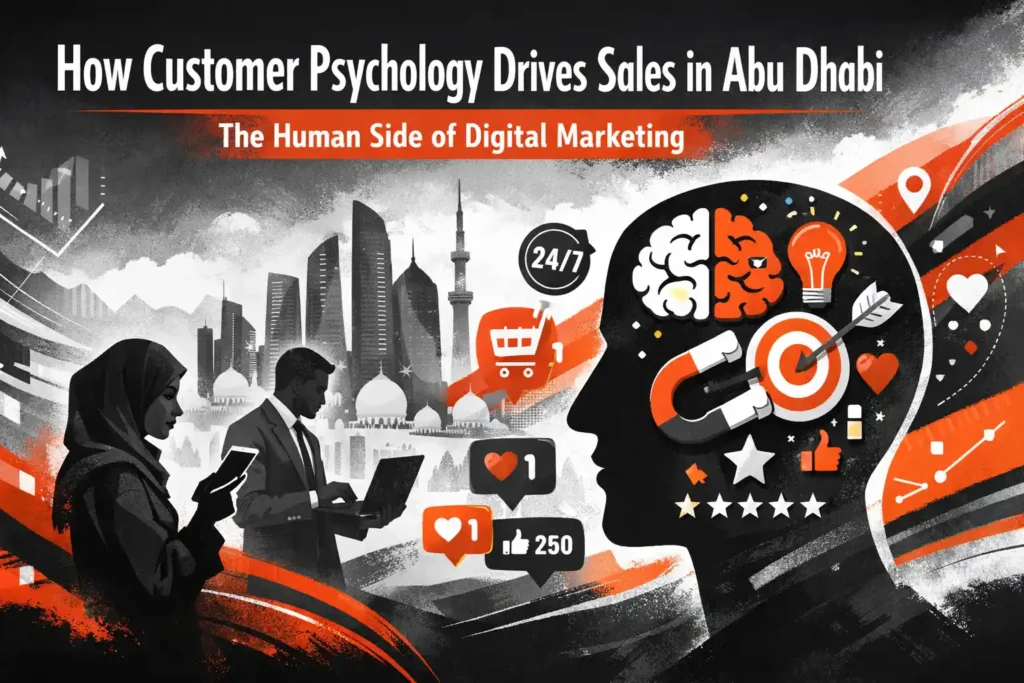
How customer psychology Drives sales in Abu Dhabi-The Human side of Digital Marketing.

Freelance digital marketing expert in abu dhabi, image for How customer psychology Drives sales in Abu Dhabi-The Human side of Digital Marketing

How customer psychology Drives sales in Abu Dhabi-The Human side of Digital Marketing.

In Abu Dhabi, people do not buy just because they see an ad. They buy when they feel understood. Behind every enquiry, call, or purchase is a thought process shaped by trust, comfort, and personal values. This is why understanding people matters more than mastering platforms.

How customer psychology drives sales in Abu Dhabi: the human side of digital marketing is not about tactics. It is about learning how customers think, what makes them hesitate, and what finally gives them the confidence to move forward. Businesses that focus on this human layer consistently see stronger and more sustainable growth.

Customer psychology in Abu Dhabi buying decisions

Abu Dhabi is a diverse city with people from different cultures, professions, and lifestyles. Despite these differences, buying behavior follows a similar pattern. Customers observe before they act.

They may visit a website multiple times, scroll through social media quietly, or read reviews without engaging. This does not mean they are uninterested. It means they are evaluating.

Customers here tend to ask themselves internal questions before buying

Is this brand reliable

Does this feel professional

Will this choice reflect well on me

Marketing that aligns with these questions feels natural and reassuring.

Trust as a sales driver in Abu Dhabi

Trust plays a central role in digital sales across Abu Dhabi. Customers prefer businesses that communicate clearly and consistently. Overpromising creates doubt rather than excitement.

A well structured website, honest service descriptions, and calm language signal stability. When customers sense reliability, they stay longer and return more often.

Trust is built through repeated exposure and consistent tone. It is rarely created through urgency or pressure. Businesses that respect this dynamic see better long term results.

Emotional comfort and customer confidence

People often believe they make logical decisions, but emotion quietly guides most choices. In Abu Dhabi, emotional comfort strongly influences buying behavior.

Customers want to feel safe in their decision. They prefer brands that sound approachable rather than aggressive. Clear explanations, polite communication, and relatable messaging reduce anxiety.

This emotional reassurance is a key part of How customer psychology drives sales in Abu Dhabi: the human side of digital marketing. When customers feel comfortable, they move forward without resistance.

Cultural sensitivity in digital marketing

Marketing in Abu Dhabi requires awareness of cultural expectations. Respect, professionalism, and clarity matter deeply.

Content that is too casual can feel careless. Content that is too rigid can feel distant. The balance lies in being respectful yet human.

Businesses that understand local expectations communicate with warmth and clarity. This builds connection without compromising credibility.

Storytelling and human connection in marketing

Stories resonate because they feel real. Instead of telling customers what to buy, stories show them why a brand exists and how it helps.

Sharing experiences, challenges, or customer journeys creates familiarity. Familiarity builds trust. Trust drives action.

Story driven content aligns naturally with How customer psychology drives sales in Abu Dhabi: the human side of digital marketing because it respects the emotional journey customers go through before making decisions.

Digital behavior reflects human intent

Digital platforms are not separate from human behavior. They simply reveal it.

Search behavior often shows urgency or intent. Social media behavior shows curiosity or interest. Website behavior shows evaluation and comparison.

When businesses understand these signals, they can respond appropriately. Helpful content meets curiosity. Clear information supports evaluation. Calm reassurance converts intent into action.

Patience and long term decision making

Many customers in Abu Dhabi do not convert immediately. They observe quietly before reaching out. This makes patience an important part of digital success.

Consistent messaging builds familiarity over time. Familiarity reduces perceived risk. Reduced risk leads to confidence.

This long term approach is often guided by a freelance digital marketing strategist in Abu Dhabi who understands that relationships convert better than pressure in this market.

Clarity reduces hesitation and friction

Confusion is one of the biggest barriers to sales. When customers struggle to understand a service, they delay decisions.

Clear navigation, simple explanations, and transparent communication increase confidence. Customers feel respected when their time is valued.

Clarity does not mean oversimplifying. It means removing unnecessary complexity from the decision making process.

Customer psychology and repeat business

Sales do not end at conversion. In Abu Dhabi, repeat business and referrals are driven by experience.

When customers feel heard and supported, they return. When they feel rushed or misunderstood, they disengage.

This is why businesses that focus on relationships grow steadily. Understanding customer psychology leads not only to sales but also to loyalty.

How customer psychology drives sales in Abu Dhabi long term

Businesses that focus only on short term tactics often struggle with consistency. Those that invest in understanding people build lasting foundations.

How customer psychology drives sales in Abu Dhabi: the human side of digital marketing reminds us that growth comes from connection. Platforms may change, algorithms may evolve, but human behavior remains steady.

Final thoughts

Digital marketing in Abu Dhabi works best when it respects people rather than pushes messages. Customers want clarity, trust, and emotional comfort before they commit.

Businesses that listen, explain, and connect naturally stand out. When marketing speaks to people as humans, sales become a natural outcome rather than a forced result.

Understanding customer psychology is not optional. It is the core of meaningful and sustainable digital growth.

Keyword Research for SEO in 2026: How People Actually Find What They’re Looking For

Freelance digital marketing Strategist in Abu Dhabi image for Keyword Research for SEO in 2026: How People Actually Find What They’re Looking For

Keyword Research for SEO in 2026: How People Actually Find What They’re Looking For

Keyword research used to be a very technical task.

You opened a tool.

You looked at numbers.

You picked words with the highest searches.

Then you published content and waited.

Sometimes traffic came. Many times it didn’t.

In 2026, it’s clear that this approach no longer works on its own. Not because search tools are bad, but because people don’t search the same way anymore. Search habits have slowly changed, and most people didn’t even notice it happening.

People type the way they think.

Sometimes they are confused.

Sometimes they are rushing.

Sometimes they don’t know exactly what they want.

Understanding this shift is where modern keyword research really starts.

People Search With Feelings, Not Just Words

Every search comes from a moment in someone’s life.

They might be stuck.

They might be curious.

They might be comparing options quietly before making a choice.

Today, keywords are not just text. They are signals. A short search often means someone is exploring. A longer search usually means someone wants clarity or reassurance.

Search engines are better at reading these signals now. They don’t just look for matching words. They try to understand what the person actually wants. That’s why content that explains things clearly often performs better than content that simply repeats phrases.

Why Keyword Research for SEO Is No Longer About Big Numbers

A keyword can look impressive on a screen.

High searches.

Good potential.

Strong topic.

But still fail to bring meaningful results.

That’s because not every visitor behaves the same way. Some people open a page and leave in seconds. Others read slowly, scroll fully, and return later.

Lower-volume keywords often bring better readers. They stay longer. They trust more. They are more likely to take action. This is why quiet keywords are becoming more valuable than popular ones.

Good keyword choices focus on relevance, not popularity.

Search Results Already Tell You the Truth

Before choosing any keyword, search it yourself.

Look at the first page.

Read a few headlines.

Notice the style and tone.

Are the articles helpful or rushed? Are they written for people or just for rankings?

Search engines already show what kind of content they believe users want. When most results feel shallow, it usually means there’s space for something better.

This simple habit often reveals more than any tool.

Long Searches Sound Like Real Thoughts

People now search the way they speak to themselves.

“Why my website is not ranking”

“How to choose keywords for a new blog”

“Is SEO still worth it”

These are not polished phrases. They are honest thoughts typed in real time.

Content written around these kinds of searches feels more relatable. It answers questions instead of pushing information. That’s why long searches work so well today.

They reflect real thinking, not marketing language.

Timing Matters More Than Ever

Not everyone searching is ready to act.

Some people are just learning.

Some are comparing options.

Some are close to deciding.

If the content doesn’t match that stage, it feels uncomfortable to read. An early learner doesn’t want pressure. Someone ready to decide doesn’t want basic explanations.

This balance is something a Freelance digital marketing strategist in Abu Dhabi often learns by watching how pages perform over time, not just how they rank.

Tools Help, but Listening Improves Keyword Research for SEO

Keyword tools still matter. They give direction and structure.

But tools don’t hear the tone.

They don’t see hesitation.

They don’t feel frustration.

Some of the best keyword ideas come from real places—emails, comments, messages, and everyday conversations. The words people use naturally often become the strongest keywords because they are honest.

Strong keyword research for SEO blends data with observation. One without the other feels incomplete.

Keywords Should Never Feel Forced

Readers can sense unnatural writing instantly.

When keywords interrupt sentences, trust drops. When they fit smoothly, readers don’t even notice them. And that’s exactly how it should be.

Search engines now understand meaning, not just repetition. Clear writing with natural variations performs better than content that sounds heavy or awkward.

Good SEO writing feels normal to read.

Keyword Research Is Slowing Down  In a Good Way

In 2026, keyword research feels calmer.

Fewer keywords.

Clearer focus.

More intention.

Instead of trying to cover everything, content performs better when it goes deeper into fewer topics. Choosing keywords you can support with real value over time matters more than chasing trends.

This slower approach builds consistency, and consistency builds trust.

Choose Keywords You Can Commit To

Some keywords look attractive but demand constant updates and pressure.

Others fit naturally into how you think and explain ideas.

Those are usually the better choice.

Modern keyword research is not just about visibility. It’s about choosing words you can stand by without forcing them into your writing.

When content feels steady and honest, readers stay. Search engines notice. And trust grows quietly, the way it always has in good SEO.

The Future of Digital Marketing in 2026: Trends People are Already Searching For

Freelance digital marketing Strategist in Abu Dhabi image for the future of digital marketing in 2026

The Future of Digital Marketing in 2026: Trends People Are Already Feeling

 Digital marketing rarely changes in obvious ways. It does not arrive with loud announcements or clear turning points. Most of the time, it shifts quietly, shaped by how people behave when no one is watching closely. That is what is happening now. You can notice it in small moments. People scroll faster than they used to. Content that once felt interesting now feels predictable. Attention is not given freely anymore. It is earned carefully. Only messages that feel useful, clear, or honest manage to slow someone down.

These small changes are shaping the future of digital marketing in 2026 long before they appear in forecasts or reports.

Marketing still works.

People simply decide more carefully what they engage with.

Search Is Becoming More Natural

Search no longer feels like typing instructions into a system.

People search the way they think. They write full questions. They compare options. They look for reassurance before making choices. Instead of searching for quick answers, they search for understanding.

Search engines have adjusted to this behavior. Content that answers real questions clearly performs better than content written only to appear in results. Pages that explain ideas calmly tend to hold attention longer.

Search today is less about speed and more about clarity. It follows human thought rather than forcing people into rigid patterns.

Content Needs Time and Care

It is easy to notice when content feels rushed.

The sentences may be polished, but they feel empty.

The structure may be neat, but it feels distant.

What people connect with now is content that feels considered. Writing that sounds like someone thought carefully before publishing. With content tools making creation faster than ever, effort alone no longer stands out. Thoughtfulness does.

When something feels sincere, readers slow down. They read more carefully. They may return later. These quiet actions influence the future of digital marketing in 2026 more than visible engagement numbers.

Social Media Is Losing Its Noise

Posting frequently once felt necessary.

Now it often feels overwhelming.

People scroll past countless updates without really noticing them. What stands out today is not how often someone posts, but whether what they share feels worth reading.

Clear ideas shared with intention create more impact than constant updates. Familiar voices feel more trustworthy than loud ones. Content that respects time builds stronger connections.

A Freelance digital marketing strategist in Abu Dhabi working on websites today understands that focus matters more than presence everywhere. Using one platform well builds trust faster than trying to cover them all.

Attention fades quickly.

Clarity stays.

Reading Behavior Is Shaping Search

Search engines now pay attention to how people behave on a page.

They notice how long someone stays. They notice where people stop reading. They notice whether someone comes back later. These signals affect how content performs.

Because of this, long blocks of text feel tiring. Short paragraphs feel easier. Clear spacing helps ideas settle. Readers do not want to feel instructed or overwhelmed. They want information that feels easy to follow.

Website content that flows like a calm explanation performs better than content that feels like a lesson. People want guidance, not pressure.

Advertising Depends on Belief

People still notice advertisements.

They simply question them more than before.

Strong claims feel familiar. Pressure feels uncomfortable. What feels different now is calm messaging. Ads that explain rather than push. Messages that sound honest instead of dramatic.

Advertising has not disappeared. It has changed its tone. Brands that communicate clearly and simply earn trust over time. That trust lasts longer than brief attention.

People may forget what an ad said.

They remember how it made them feel.

Branding Is Becoming Clear and Steady

Loud branding does not stand out the way it once did.

Many brands sound similar. Many make the same promises. What feels refreshing now is clarity. Brands that understand what they represent and communicate it in a steady way.

Using simple language helps people feel comfortable. A consistent tone helps people recognize a brand over time. Trust grows when communication feels familiar rather than constantly changing.

Search naturally supports this approach. Repeating clear ideas helps more than repeating keywords. Brands that stay steady are easier to remember.

Numbers Are Helpful but Not Complete

Data shows what happened.

It does not always explain why it happened.

Sometimes content works because it reassures someone. Sometimes because it reflects a feeling they already had. Sometimes because it does not try to convince or impress.

Good marketing balances numbers with observation. Watching behavior. Noticing patterns. Paying attention to what people do quietly.

Not every insight appears in analytics.

What the Future Really Looks Like

Digital marketing is not slowing because it is failing.

It is slowing because people are choosing carefully.

Less noise.

More thought.

Less urgency.

More clarity.

Search is evolving. Social platforms are adjusting. Technology is supporting human thinking rather than replacing it. The future belongs to those who understand the future of digital marketing in 2026 as reflections of real behavior, not formulas.

The most important changes rarely announce themselves.

They simply change how people respond

Scroll to Top